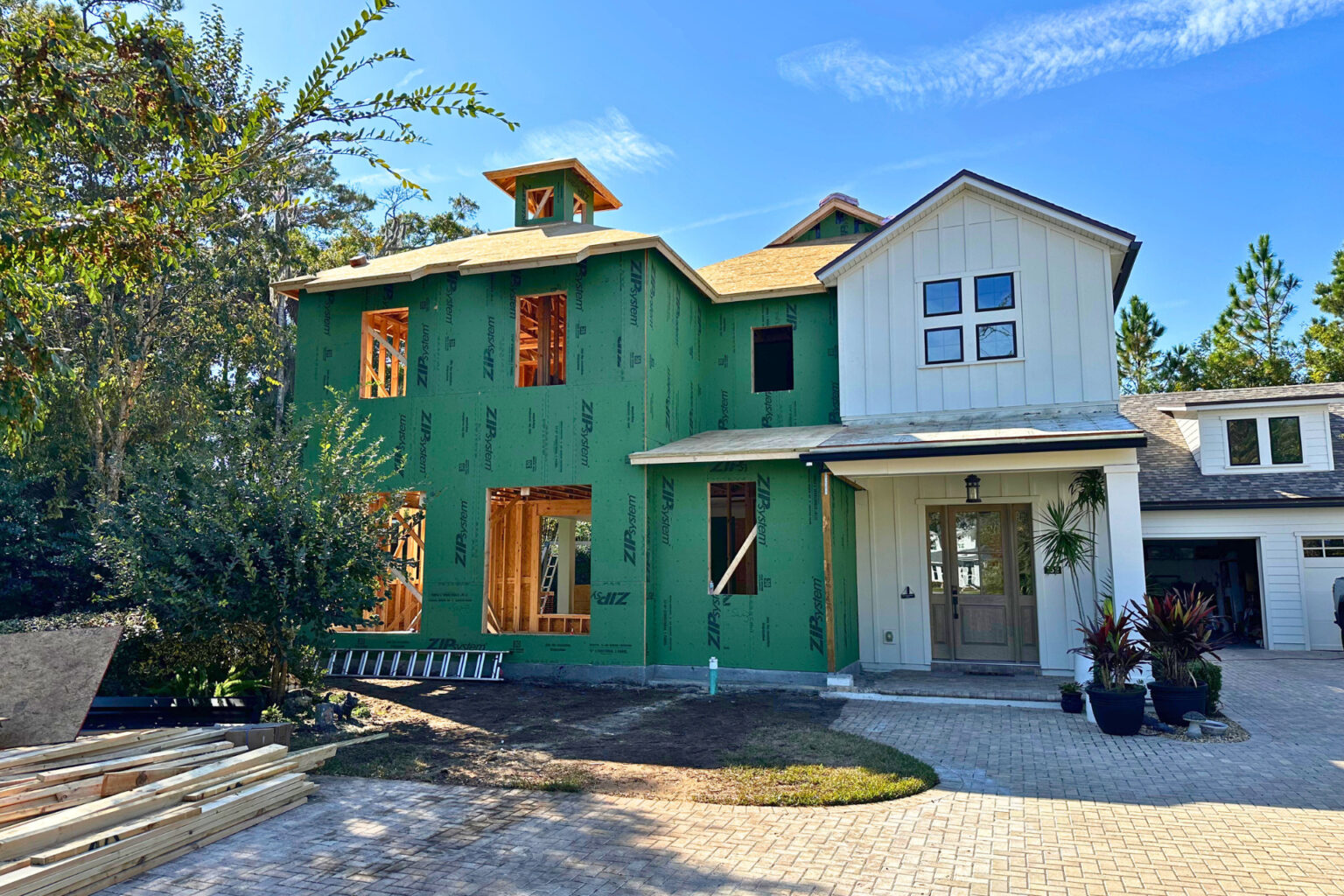
A good addition should feel like it’s always been there. When people ask us how to match a new addition with an existing home style, they’re usually worried about ending up with a house that looks awkward, mismatched, or slapped together. Here’s how we approach it.
Design approaches: old meets new
There are a few proven ways to handle the relationship between existing and new spaces:
- Match and mirror: The most traditional approach, where new elements closely reflect existing ones. This is the approach we’re taking for our own home addition.
- Transitional: A modern translation of the original style, blending old and new without sharp contrast, as we did for the Roscoe home.
- Intentional contrast: A clearly modern addition paired with a traditional home, but still balanced in scale and proportion.
Thinking about a home addition? Avoid these 6 surprising mistakes.
Think beyond the new space
It’s easy to design an addition as if it’s its own project, but that’s often when problems show up. For example, a sunroom might seem perfect on paper, but what if it blocks natural light into the kitchen?
An addition changes:
- Lighting
- Structural loads
- Roof drainage
- HVAC capacity
- Electrical runs
- How people move through the house
That’s why we look at the home as a whole, as opposed to a collection of rooms.
You may also be interested in: 9 creative home addition ideas to expand your Jacksonville space
Match the style, not the age
A common misconception is that an addition has to look “old” to match an older home. Not true. What actually matters is:
- Scale
- Proportion
- Rhythm (spacing of windows, doors, columns)
You can introduce cleaner lines or slightly updated finishes if the underlying structure respects the original design language.
Start with the parts people notice first
Before you think about floor plans or finishes, step back and look at the house from the street. Every single detail doesn’t need to match perfectly, but they need to make sense together because the eye catches any inconsistencies immediately (well, mine does anyway!). For example, if your home is stucco with simple trim, adding board-and-batten siding without a transition plan will look awkward.
Architectural style
The new structure should clearly belong to the same architectural family as the original home. That doesn’t mean copying every detail, but the overall design language should feel consistent.
Rooflines and pitch
Rooflines matter more than most people expect. The pitch, ridge height, overhang depth, eaves, and soffits all need to relate to the existing structure. If they don’t, the addition will always read as new.
Pro tip: In coastal NE Florida, roof proportions are often tied directly to wind loads and drainage. Getting this wrong can also become a functional issue.
Materials and textures
Exterior materials should talk to each other. Matching siding, brick, or stone is ideal, but complementary materials can work if they’re intentional. Mixing textures without a clear plan is where things start to feel disjointed.
Proportions and scale
An addition should be sized in proportion to the original home. Features that overpower or feel noticeably smaller than the existing structure create an imbalance that’s hard to ignore.
Windows and doors
Window shapes, sizes, placement, and trim details matter. Aligning proportions and matching elements, like casings and cornices, helps the exterior read as one cohesive home, rather than two competing ideas.
Interior flow is just as important
Even if the home’s exterior looks seamless, poor interior transitions will draw unwanted attention to an addition. Pay attention to:
- Flow and layout
- Aligning ceiling heights wherever possible
- Consistent finishes, such as flooring, baseboards, crown molding, and paint palettes (they don’t need to be identical, but they should clearly belong to the same home)
- Lighting fixtures that relate stylistically to the rest of the house
- Furnishings with similar textures, colors, and motifs
When these details are handled correctly, people stop asking which part is the addition.
You may also be interested in:
Think like a future buyer (even if you’re staying put)
You may plan to stay in your home for years, but additions live longer than intentions. Homes in NE Florida are often evaluated quickly by buyers. If an addition feels awkward or overbuilt compared to the rest of the home, it can have a negative impact on the home’s value. A well-integrated addition usually does the opposite.
Experience makes the difference
As one client put it: “John Merrill Homes…did a fantastic job on our home addition. They were competitively priced and completed the project on time. Everyone in the office communicated well, and the team took the utmost care of our home. My husband works in commercial construction and has an understanding of what goes into the residential building process. He was thoroughly impressed by the JMH team. We are actually going to use them again soon!”
A successful home addition depends on dozens of interconnected decisions. When architects, designers, and builders work separately, gaps appear. When your designer and builder are part of the same team, the entire process changes. Conversations happen earlier, problems get solved before they show up on site, and every decision is made with the full picture in mind.
Let us know if you’d like to chat about your home addition plans.
