When you’re building a custom home, adding onto your existing home, or remodeling, the final floor plan affects nearly every part of daily life. It determines how your family moves through the home, where people gather, how much privacy everyone has, and whether the house still works five or ten years from now.
Start with your lifestyle
Many homeowners begin by collecting floor plans online and counting bedrooms, bathrooms, and bonus spaces. That’s understandable, but it often leads people in the wrong direction.
We encourage our clients to think about a typical weekday. One of the first questions we ask isn’t how many bedrooms they want or what style of home they prefer. It’s: how do you actually live? (You can learn more about our process here.)
- Where does everyone spend most of their time?
- Do you work from home several days a week?
- Do you host extended family during holidays?
- Are your weekends centered around the pool, the patio, or the boat?
- How often do you entertain guests?
- Will aging parents or adult children potentially live with you in the future?
- How important is privacy between bedrooms and living areas?
- How frequently will you use outdoor spaces?
- Which rooms need flexibility as your family evolves?
For example, if your family gathers in the kitchen every evening, the relationship between the kitchen, dining area, and living room matters more than adding another rarely used room.
If you’re building in Northeast Florida, outdoor or coastal living often becomes part of everyday life. That may mean prioritizing covered lanais, large sliding glass doors, outdoor kitchens, or direct access between the pool and indoor entertaining spaces.
Open floor plans are evolving
For years, open-concept homes dominated residential design. People loved the natural light, sight lines, and sense of spaciousness. Interestingly, many homeowners today are asking for something a little different. Factors like working from home, online learning, and multi-generational living have all changed what people expect from their homes.
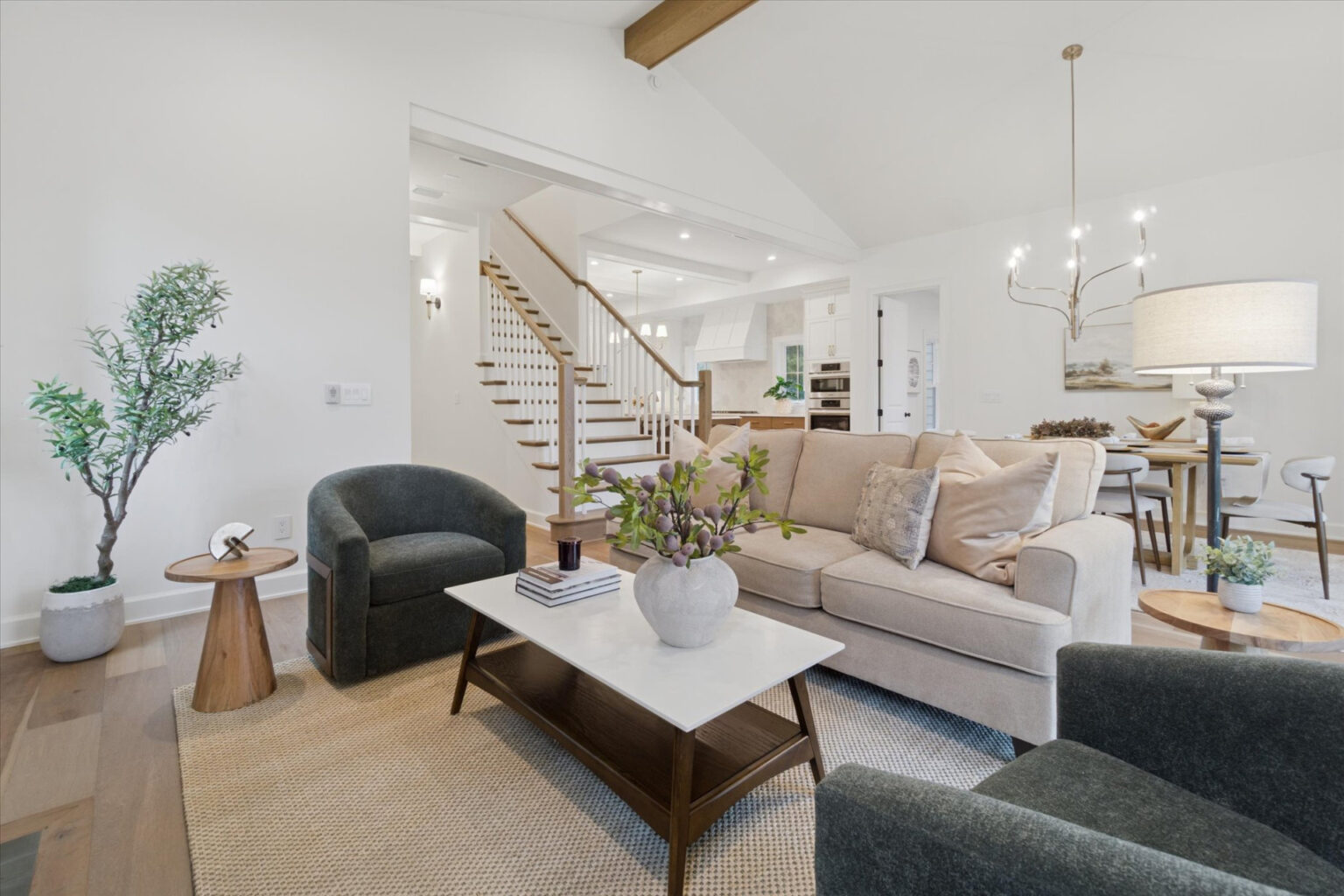
Nowadays, many people want openness without feeling like every activity happens in one giant room. Instead of walls everywhere, designers are using architectural features to establish distinct zones while maintaining flow:
- A fireplace wall to subtly divide spaces (we did something similar for our own home addition)
- A breakfast nook to create a natural transition between rooms
- Ceiling treatments, beams, built-ins, and strategic room placement to give each area its own purpose without sacrificing openness
Consider how your needs may change
When choosing a flexible floor plan for family changes, you need to consider where you all might be in five to ten years from now. That was one of the main reasons behind our own home addition project—the kids are growing up, and the way we all use the common living space is changing.
Of course, you won’t have all the answers, but you do want to avoid creating a home that’s too rigid. The most successful custom homes include spaces that can evolve without major renovations. That’s one reason flex rooms, bonus rooms, lofts, and secondary living spaces continue to gain popularity.
With all this in mind, let’s get into…
3 floor plan trends we’re seeing at the moment
1. Flexible multi-use spaces
Rather than assigning a permanent purpose to every room, homeowners are creating spaces that can serve multiple functions over time. For example, a room near the front of the home may work as an office today and a nursery later, or a bonus room upstairs might become a guest suite, hobby room, or second family room. This approach gives families more options without increasing the home’s footprint.
2. Stronger indoor-outdoor connections
In Northeast Florida, outdoor living is often part of daily life for much of the year. A well-designed floor plan integrates outdoor spaces into the home’s overall flow. Large pocket sliders, covered outdoor gathering areas, summer kitchens, screened porches, and thoughtfully positioned pools help blur the line between inside and outside.
3. More privacy through zoned living
Thoughtful separation between activities has become one of the most requested features in custom home design. For example, primary suites are increasingly located away from secondary bedrooms, home offices are positioned where meetings won’t compete with family activities, and guest suites often receive their own wing or private corner of the home.
A real example of designing around the way a family lives
One of our favorite examples is Preserve 2 in Ponte Vedra Beach. The property presented an unusual challenge: a magnificent heritage oak tree occupied a significant portion of the lot. Rather than viewing the tree as an obstacle, we allowed it to influence the home’s design. The resulting floor plan maximized views, embraced outdoor living, and created a natural flow between spaces.
We also incorporated a bathroom that serves two purposes. It functions as a guest powder room while also providing convenient access from the pool area. For the family, we located a playroom adjacent to the kitchen so parents could maintain visibility and connection throughout the day.
You may also be interested in: The straightforward way to plan a home addition
Choosing a floor plan isn’t copying a house you saw online
The right floor plan should make your everyday life easier—daily routines happen naturally because the home was designed around real life. If you start there, you’ll make better decisions, avoid costly compromises, and end up with a home that continues to serve your family for years to come.
And if you need help doing just that, that’s what we’re here for!
You may also be interested in: