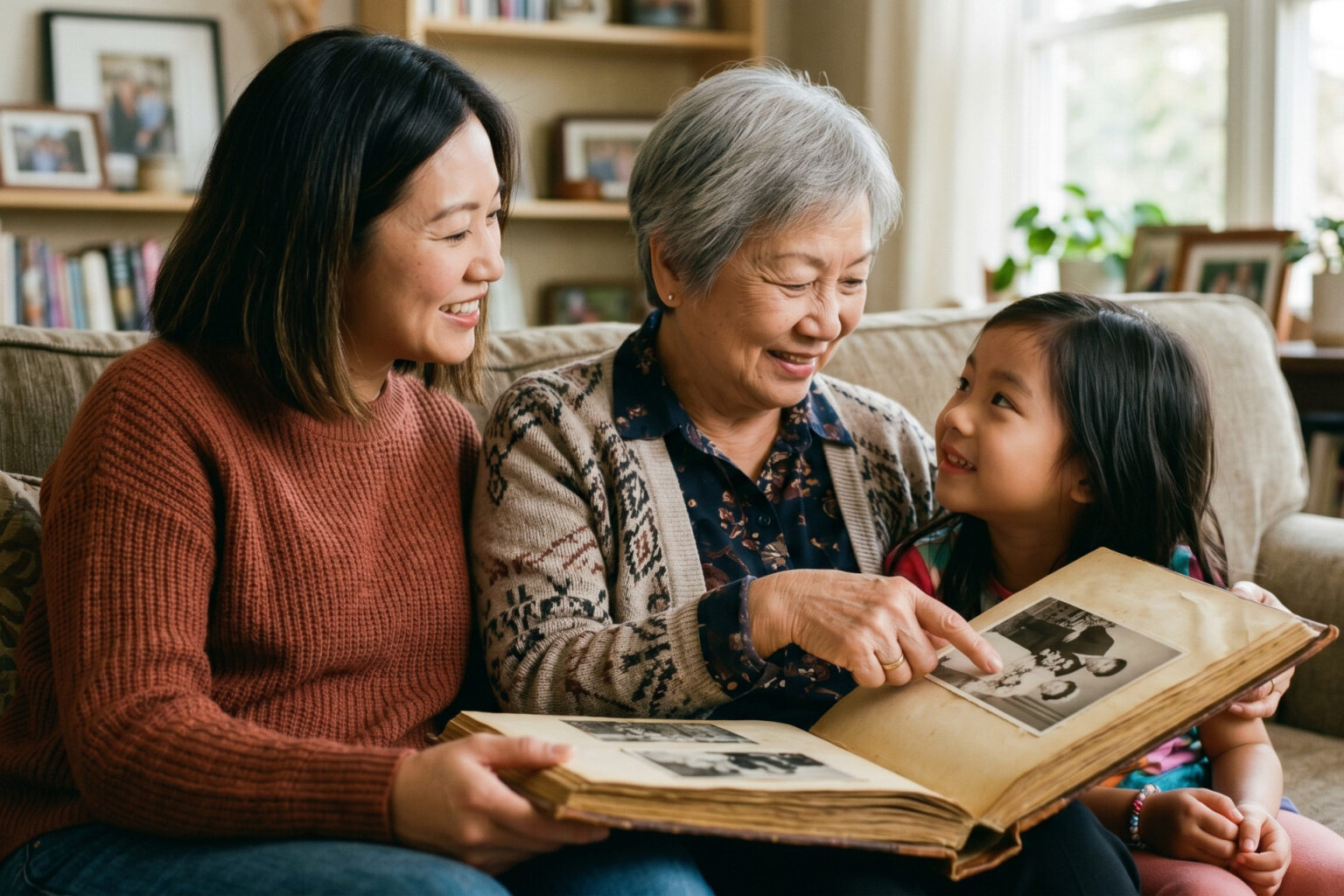
For a long time, multigenerational living was simply how families lived. Before World War II, it was common for older parents, adult children, and grandchildren to share one home. As the decades passed, families spread out, retirement communities became more common, and independence became the goal. Separate homes became the standard.
Now, that shift is starting to move in the other direction.
A housing trend we’re noticing at the moment is how more families in Northeast Florida are rethinking the ways they live together. Families who once would have bought separate homes are instead investing in one thoughtfully designed property that works for everyone living there.
As a family business, we’ve recently completed our own addition to accommodate changing family needs. We understand the conversations that happen around the kitchen table before a project like this begins, so we’re going to share some considerations that should go into those chats.
What the numbers say
- The number of multigenerational homes in the United States has climbed by 700,000 in a little over 10 years to 4 million households
- This amounted to a 4.5% share of the market in 2024, up from 4.3% in 2019
- In America’s 50 largest cities, this share jumped to an average of 6.1%
Note: the Realtor.com study above classifies homes as multigenerational based on keywords in property listings rather than analyzing the ages of those who live in the homes.
- According to Pew Research, the number of people living in multigenerational households quadrupled between 1971 and 2021
- The share of people in these living arrangements soared from 7% to 18% in that time period
- Zillow saw a nationwide rise in searches for accessory dwelling units, also known as granny flats, and in-law suites in 2025
Why more families are choosing multigenerational living
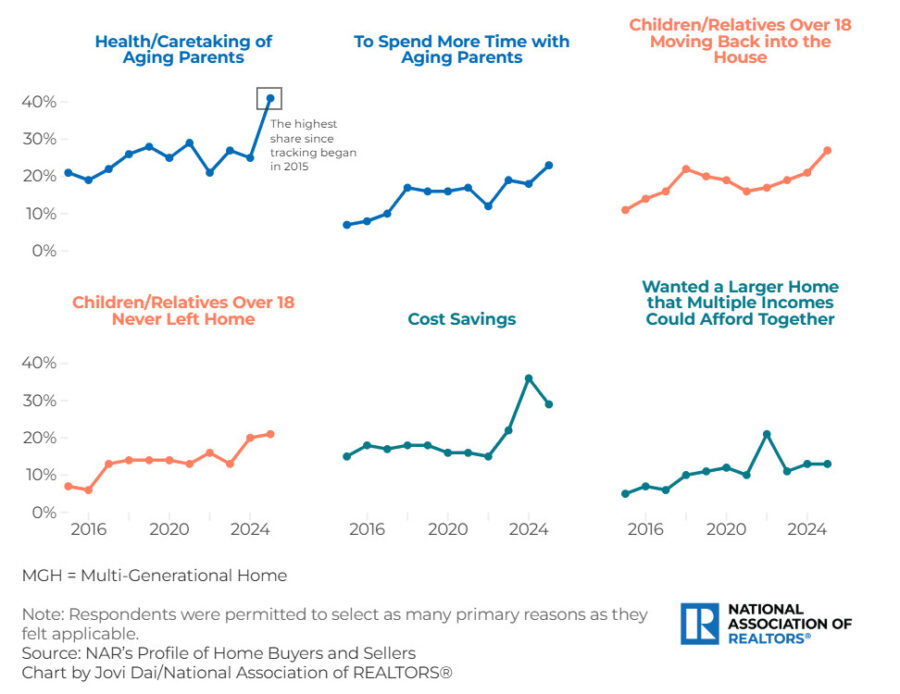
Multigenerational households continue to rise across the U.S., driven by a mix of economic realities, caregiving needs, and lifestyle preferences.
According to data from the National Association of Realtors® Profile of Home Buyers and Sellers, 41% of recent buyers said the primary reason for buying a multi-generational home was to care for or support aging parents.
Other reasons include:
- Spending time with aging parents
- Children or relatives (over the age of 18) moving back into the house
- Children or relatives (over the age of 18) who’ve never left home
- Cost savings
- Wanting to share resources to buy a larger home
Along with the stats, we’re seeing a shift in how people think about home. These days, many families are realizing there’s value in proximity when the home is designed correctly.
- Parents can age nearby without giving up independence
- Grandparents can help with childcare without driving across town every morning
- Adult children can save for their next move without feeling like permanent houseguests
- Families can pool resources into one exceptional property instead of spreading money across multiple homes that don’t fully meet anyone’s needs
Additions are becoming just as popular as new builds
Not every family (ours included) wants to move. A lot of homeowners already love where they live, so instead of selling, they expand to accommodate multigenerational living. That could mean adding a detached guest house for a parent, a full second-story addition with private living quarters, or reworking an existing layout that no longer fits the family, as we did in our own home.
We’re currently working on an addition for a client whose father is moving in with them. The goal was to create a living arrangement where everyone can live together while maintaining their own privacy and independence.
FAQ: How long do home additions take?
What makes a multigenerational home work
Adding an in-law suite onto a house is not the same thing as designing a home around multiple generations. The homes that function best tend to include a balance of shared spaces and retreat spaces. Nobody wants to feel like they’re living on top of each other.
Some smart design decisions include:
- Separate entrances or semi-private wings
- Independent guest suites with kitchenettes
- Flexible bonus rooms that can evolve over time
- First-floor primary suites
- Wider hallways and accessible bathrooms
- Outdoor living areas that allow people to gather without crowding indoors
- Sound separation between sleeping areas
- Dual laundry or prep spaces in larger homes
Adaptable design is also important: A guest suite today may become a caregiver space later, or a bonus room might eventually become an office, gym, or bedroom. The best multigenerational homes evolve as families do.
You may also be interested in: The straightforward way to plan a home addition
Considerations for NE Florida
Building a multigenerational home in Northeast Florida comes with considerations that don’t necessarily apply elsewhere. For example:
- Outdoor living becomes a major extension of the home, so covered lanais, summer kitchens, pools, and courtyards can help create natural gathering spaces while easing pressure on interior rooms
- In neighborhoods with larger lots, detached structures and private guest accommodations become more viable
- You’ll need permits to add onto your home
- In many luxury communities, HOA requirements, flood zones, and lot constraints all influence what’s possible
You may also be interested in: Smart ways to finance your home addition
Why multigenerational families choose John Merrill Homes
Building or adapting a multigenerational home requires learning how a family actually lives. At John Merrill Homes, we approach multigenerational projects with the understanding that families need solutions tailored to real life. And because we’ve navigated these decisions within our own family, we understand that the conversation goes deeper than finishes and floor plans. The goal is to create a home that functions beautifully for everyone living there, both now and years from now. Get in touch to chat about your multigenerational home plans.