

Absolutely. Go ahead and have fun with it. AI image generators can be incredibly useful when you’re trying to figure out what you like. You can type in “modern coastal home with a covered porch,” and suddenly you’re looking at a dozen possibilities. Then you can change the roof, try different windows, add a pool, and make the kitchen bigger. It’s like Pinterest on steroids.
But there’s a big difference between using AI to imagine a house and actually designing a custom home, because a custom home isn’t simply a collection of rooms with a particular look. There’s a lot more going on behind the scenes.
What can AI help with?
AI can be a useful brainstorming tool, particularly at the very beginning of a project. If you aren’t sure whether you prefer a modern farmhouse or a more traditional coastal look, AI can help you visualize the differences. You can experiment with exterior materials, rooflines, window styles, colors, and landscaping.
It can also help you communicate with your designer or builder. Instead of saying, “I want it to feel more modern but still warm,” you can show us five images and say, “I like this roof, these windows, and the way this porch connects to the house.”
And if you’ve ever spent three hours scrolling Pinterest because you know you like something but can’t quite put your finger on what it is, AI can make that exploration much faster.
Where we would draw the line is assuming that an AI-generated image is a set of construction plans. AI can generate an impressive-looking exterior, but it doesn’t necessarily know whether the design makes sense for your lot, how the structure needs to be supported, whether the windows are appropriately specified for the location, how water will move away from the house, or what local requirements apply. It doesn’t know that the perfect-looking outdoor living area might face the worst afternoon sun, or that moving a window six feet could give you a much better view. Those are design and construction decisions.
Your lot matters more than the AI prompt
One of the biggest differences between generating an image and designing a home is the site.
You can ask AI to create a beautiful home overlooking water, but designing a real house to take advantage of the water view while working within setbacks, grading, access, drainage, structural requirements, and budget is a different exercise. That’s why our custom home design process starts with understanding the site. We need to know what we’re working with before we start deciding where the rooms should go.
Sometimes the challenge is what the lot won’t give you
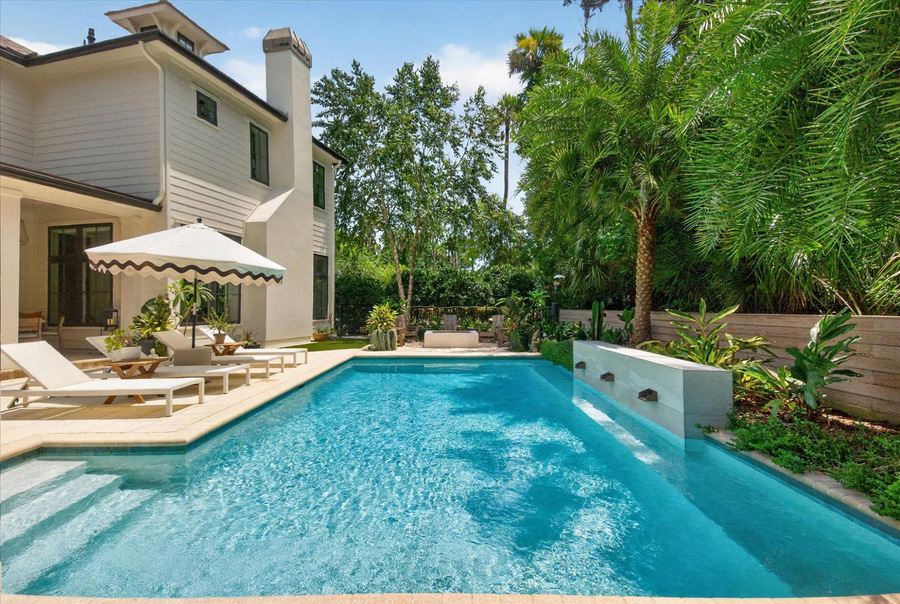
The Preserve One home we created in Ponte Vedra Beach is another good example. The property is about one-third of an acre, with preserve land on two sides. If you asked an AI tool to design a “luxury home with a private backyard pool,” you’d probably get exactly what you asked for. But that wasn’t the site we had.
Instead, we designed a wider home that made better use of the property and created an outdoor living area in the side yard. Landscaping provided privacy around the pool, cabana, and fire pit. The property helped determine the design, not the other way around.
AI doesn’t know how your family lives
You can tell AI to design a four-bedroom house with an open kitchen, home office, and outdoor living area. But does that tell you how the house should function?
Where do backpacks land when the kids come home?
Does someone work from home while another person is watching TV?
Do you entertain often
Would you rather have a formal dining room or a larger everyday eating area?
Where will the dog sleep?
What happens when your parents come to stay?
What will you wish you’d thought about five years from now?
Modern Farmhouse One, another of our favorite portfolio pieces, was designed for empty nesters who wanted a home that felt spacious without becoming difficult to manage. The single-story floor plan lives larger than its footprint, with an open living, kitchen, and dining area, a dedicated office, and thoughtful storage. It’s a design decision based on a particular stage of life. AI can probably generate a beautiful empty-nester house, but it can’t have a conversation with the people who are going to live there and understand what “easy to live in” means to them.
The details are where custom design gets interesting
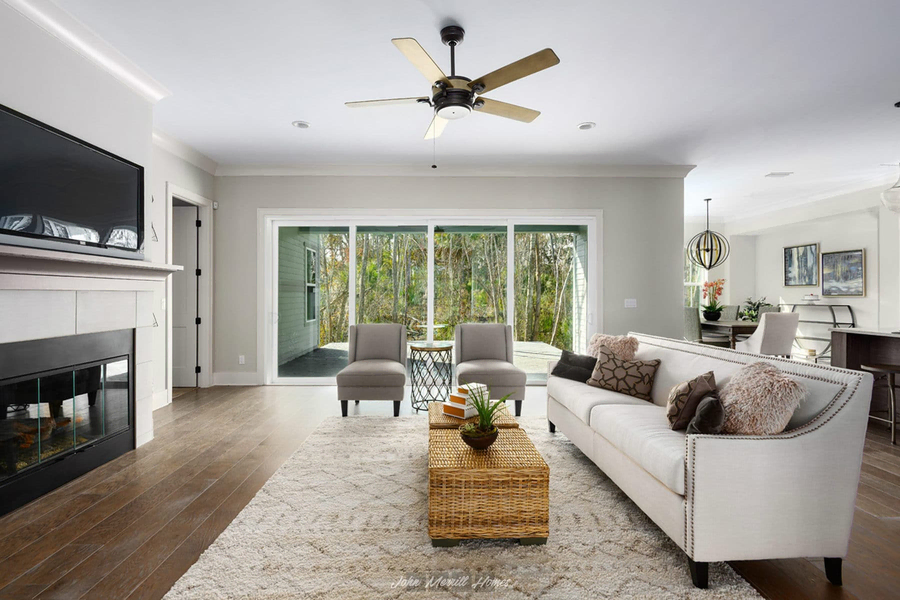
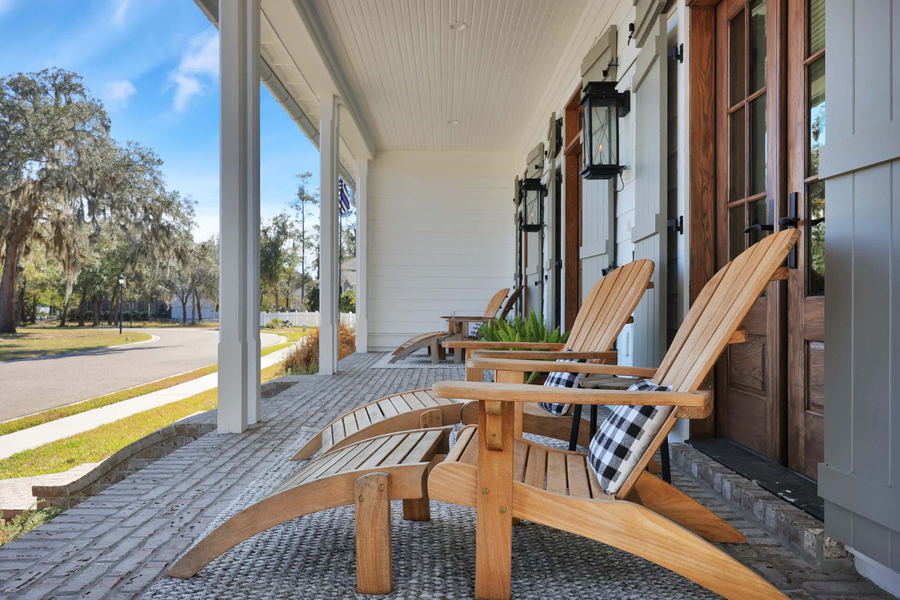
Some of the best parts of a custom home aren’t obvious from a floor plan. The Lowcountry Farmhouse is a good example. The homeowner wanted exposed columns with chamfered edges, an uncommon detail in the area. Finding someone who could build them correctly was a challenge, but it was important to the overall vision. The home also has a custom cast-stone herringbone fireplace and a stairwell fixture that becomes a focal point visible from the rear of the house. Would AI get all that right? We have our doubts!
Sometimes the best design decision is a very practical one
Riverfront Estate sits along the St. Johns River and was designed for a homeowner who regularly entertains business associates and clients. The home has an outdoor kitchen with cabinetry selected for its ability to withstand moisture and outdoor conditions. There’s also a hidden pantry next to the main kitchen that opens into a full second kitchen with a dishwasher, refrigerator, sink, and additional storage.
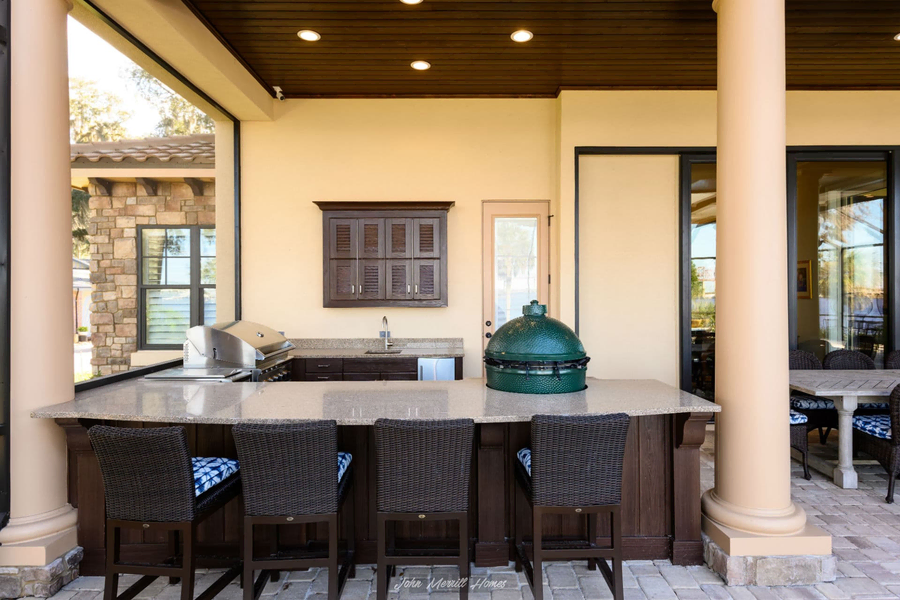
You could certainly ask AI for a “luxury entertaining kitchen,” and it might give you a beautiful image. But it probably won’t tell you that a second kitchen could be the feature that saves you from having dirty dishes and catering equipment taking over the main kitchen when you’re entertaining. That’s the difference between designing for a picture and designing for a life—AI can help you find your style, but it can’t replace the design process.
You may also be interested in: The custom home features you’ll be glad you included in 2027
The best custom homes involve hundreds of decisions
When we design a custom home, we’re thinking about far more than the number of rooms. We’re thinking about how the home sits on the lot, where the natural light comes from, how people move through the house, where the views are, how the outdoor spaces connect to the interior, how the structure will work, and which materials make sense for the environment.
Then there are all the decisions you don’t necessarily see in a finished photograph:
- Where mechanical systems go
- How water drains
- Where storage is located
- How doors swing
- How furniture will fit
- How the kitchen functions when five people are using it
- How a window affects the structure
- How a material will perform in Northeast Florida’s climate
- Whether a beautiful idea is worth what it costs to build
That’s custom home design.
You may also be interested in: 10 questions to ask a custom home builder before you hire one
So, can AI design your custom home?
Maybe, if a design and construction expert is using a specialized tool. If you’re using AI to design your own custom home, by all means, use it to explore, experiment, and discover what you like. Then bring those ideas to people who understand the property, the construction process, and the realities of building a home.
At John Merrill Homes, we don’t expect clients to arrive with a finished design—that’s our job.
You can bring us a Pinterest board, an AI-generated image, a photo of a house you love, or a napkin sketch of an idea you’ve had for years. We’ll help you figure out what can work, what needs to change, and where we can take the idea further.
.
If you’re considering a custom home in Jacksonville or Northeast Florida, explore the John Merrill Homes portfolio for real examples of what thoughtful custom design looks like. Or get in touch to talk through your ideas.