Building a custom home is a major undertaking, and choosing the right builder deserves more thought than comparing a few estimates. The builder you hire will have a lot to do with how the finished home looks and performs. Just as importantly, they will shape the experience of getting there, including the hundreds (yes, hundreds) of decisions you’ll be making along the way.
So, what should you ask a potential custom home builder?
1. Can you explain your design-build process?
Ask the builder to walk you through the entire design-build process in plain English. You should come away understanding what happens next and who is responsible for it.
In our business, the benefit of combining design and construction is that those two sides of the project can inform each other. We’re able to consider design decisions alongside construction realities instead of treating the two as completely separate phases.
2. How do you figure out what a client actually wants?
Most clients come to us with ideas. They may have saved hundreds of photos on a Pinterest board, or know they want a certain kind of kitchen or a particular architectural style. Others may have no idea what they want, but they know they need to accommodate a certain lifestyle or family structure.
That’s where the design relationship with your builder becomes important. Our job isn’t to simply take your list and turn it into a house; sometimes the most useful thing we can do is help you work out what you are really trying to achieve.
Even if you do feel confident about your ideas, a good custom home builder doesn’t require you to arrive with every answer. The right design partner can take your instincts and turn them into something tangible. (That’s one of the parts of the work we enjoy most: taking a client’s ideas, even when they’re still rough, and finding a creative solution that makes sense.)
As one of our clients said: “From the first meeting with Adam and his team, they made us feel at ease and truly listened to what we tried to explain to them and describe as our dream home. When we sat down with him again, he had put together an amazing plan for us and totally got what our vision was.”
3. Can you show me homes where you solved a design problem?
Don’t only look at the biggest or most impressive homes in a builder’s portfolio. Ask them to show you projects where they had to solve something difficult.
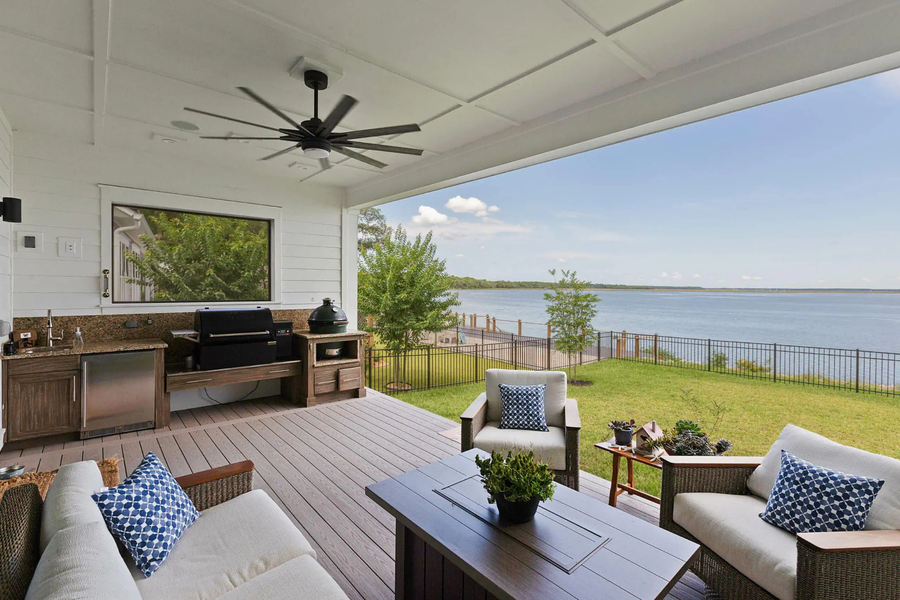
For example, at one of our Waterman’s Bluff projects, the property and its river views played a major role in the design. The home was also detailed with reclaimed heart pine sourced from an 1800s Jacksonville warehouse. Those decisions were part of creating a home that made sense for its setting and the people who would live there.
4. How much freedom will I have to change the design?
“Custom” should mean something. Ask your builder what happens when you want to move a wall, rethink a room, or explore an idea that wasn’t part of the original plan. You should also ask how they handle design changes financially and at what point a change becomes expensive or disruptive.
Of course, there is a balance here. Good builders don’t want clients making major decisions at the last possible moment, and clients shouldn’t expect every change to be free, but a truly collaborative process should leave some room for discovery.
5. How do you approach the details?
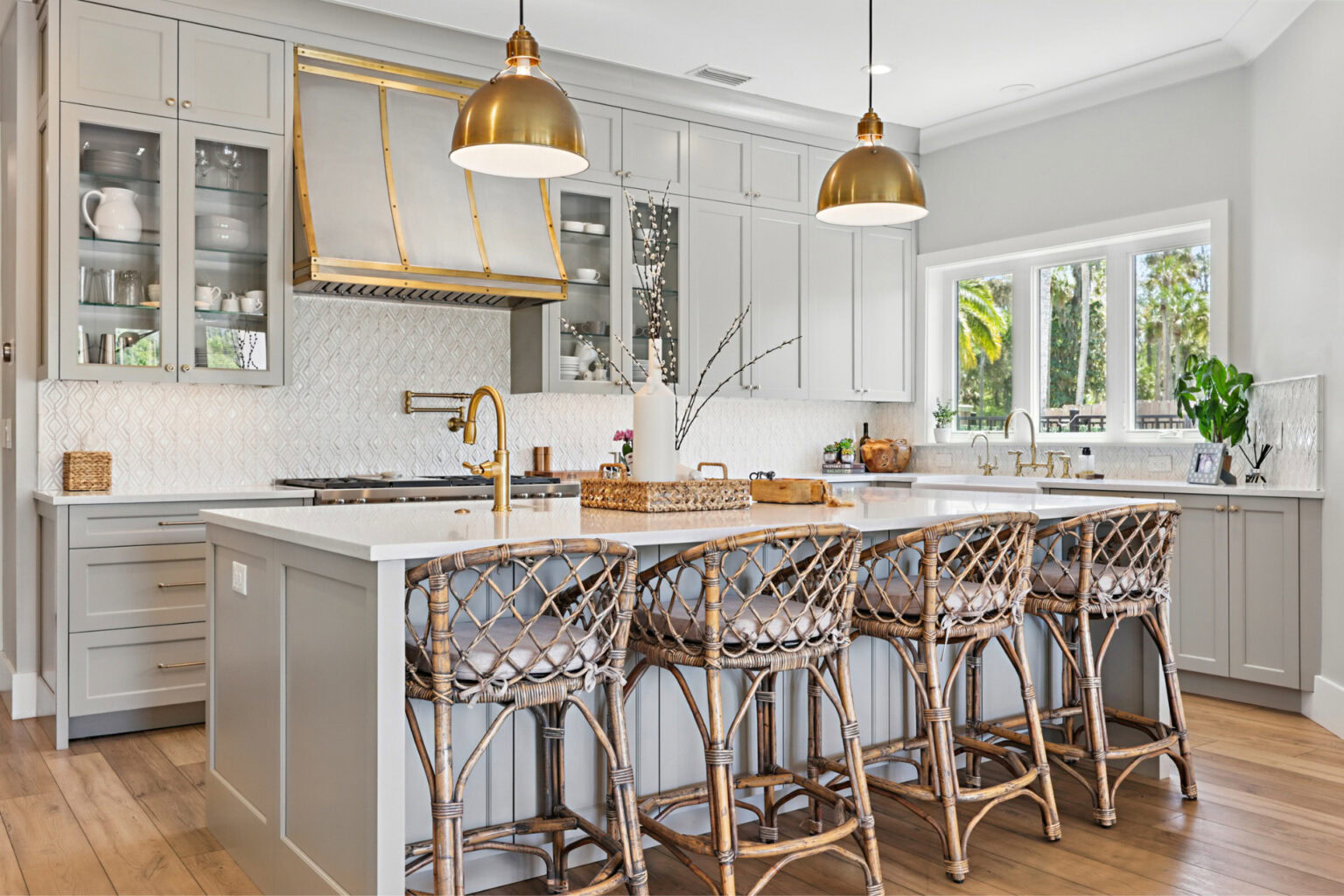
A home can have beautiful finishes and still feel ordinary if the details haven’t been considered carefully. For us, those details are part of the design process from the beginning. We’re thinking about them long before someone installs the final piece of hardware. So, if a builder talks enthusiastically about those details, take that as a good sign.
6. Who will be my main point of contact?
Building a home involves plenty of conversations, so you should know who is having them with you. This sounds straightforward, but ask for specifics: Will you communicate directly with the builder, a project manager, a designer, or someone else in the office? And who makes decisions when something unexpected comes up? Also ask how often you can expect to communicate and how decisions are documented.
7. How do you handle a problem when something doesn’t go according to plan?
We’ll tell it to you straight: every construction project encounters something unexpected. Materials get delayed, conditions turn out to be different from what was expected, or a design decision needs to be reconsidered. These things will happen, but what matters is how the builder responds. Ask for a real example of something that went wrong in a build and how they dealt with it.
You may also be interested in: What we learned from being our own home addition client
8. Who actually builds the home?
Ask about the builder’s subcontractors, trades, and suppliers: How long have they worked together? Who supervises the work? How are quality issues handled?
It takes a network of people who understand the level of work expected and can execute it consistently, so ask a builder to tell you about those relationships.
9. What happens after the house is finished?
The relationship with your builder doesn’t necessarily end when the keys are handed over. Ask what happens when the project is complete, and especially about what happens if something needs attention after move-in.
As our client Bob said, “The other thing that makes me extremely happy that I picked John Merrill Homes to build my house is the response I have received from them since we have moved into the house. Even though the house is finished and we have completely paid for the house, when we call them to ask a question or have a concern about something with the house, they respond to us very quickly and even come over to the house to respond to us.”
10. What kind of client do you work best with?
You’re interviewing the builder, but the builder should be interviewing you, too. The best projects tend to happen when the client and the design-build team have a similar understanding of what they’re trying to accomplish.
If you’re looking for the largest possible house for the lowest possible price, you may want a very different builder than someone who cares deeply about quality materials, craftsmanship, and how the home fits into everyday life. (Neither approach is inherently wrong; they are simply different.)
One final question: Do I trust these people with my home?
After you’ve asked about contracts, budgets, schedules, and construction, take a step back and consider how the conversation went. Did the builder listen? Did they ask questions you hadn’t considered? Did they challenge an idea when they thought there was a better solution? Could you see yourself having a difficult conversation with them if something didn’t go according to plan?
Remember, you’re going to spend a lot of time with your design and construction team, so you should feel comfortable telling them what you like, admitting when you don’t know what you want, and changing your mind when you see a better idea.
A custom home is an opportunity to create something that fits your life, your property, and your priorities, so ask about the practical things, look closely at the work, meet the people you’ll actually be working with, and pay attention to how they think.
Want to run these questions by us? We’d love to hear from you.
Thinking about building a custom home in 2027? Here’s why it may be the right time.